Choose a filler by its dimensions, shape and surface treatment as well as its material. Start with the finished application, shortlist components, and assess a sample in the exact base, cavity or adhesive you plan to use.
Match the component to its job
| Component | Possible role | Check before selection |
|---|---|---|
| Resin or acrylic flatbacks | A visible focal decoration | Back profile, thickness, weight and attachment |
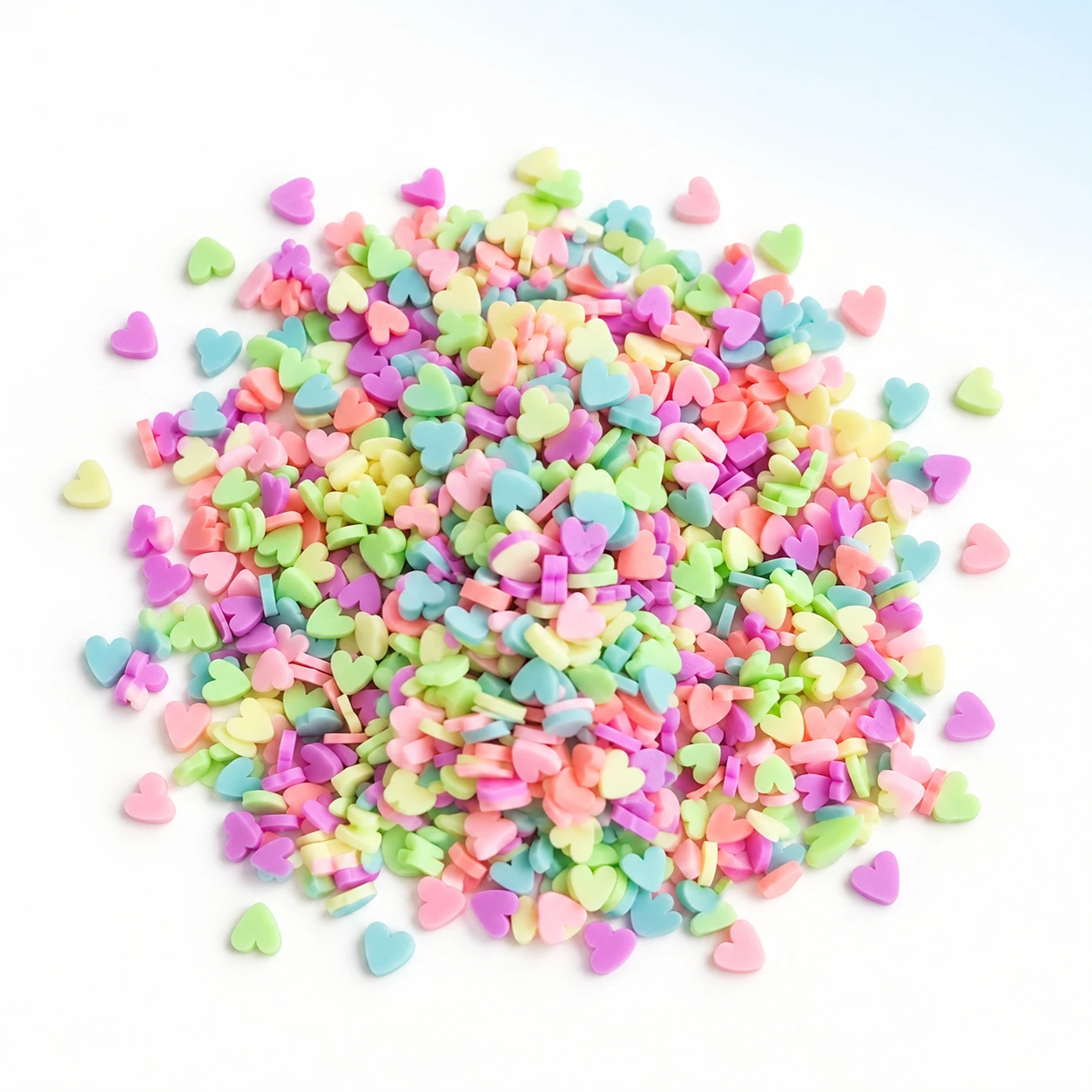
| Polymer clay slices | Small motifs spread through a mix | Slice dimensions, thickness and print detail |
| Glitter and sequins | Reflective accents or moving confetti | Particle size, coating and whether holes are present |
| No-hole decorative beads | Round accents and loose filling | Diameter, rolling behavior, coating and cavity clearance |
These are selection directions, not material performance guarantees. Our product catalog separates material collections while application filters help you identify candidates. Confirm the actual composition of each chosen reference rather than inferring it from the collection name.
For dry projects, check space and movement
A dry shaker needs enough room for its largest component to move. Measure the finished cavity and its narrowest opening. Test both the largest charm and the fine particles: a piece can fit through the opening yet still jam after assembly. Check the closure, static buildup, trapped pieces and the appearance at the intended fill level.
For decoden or mounted embellishments, review the back of the piece and the real bonding area. A flat-looking front view does not establish that the reverse side is flat. Use your intended adhesive and surface for sample approval.
For wet or cured projects, start a separate sample record
For slime, compare texture, color transfer and appearance in your actual base. For epoxy or UV resin, record the resin system, casting depth and process conditions, then examine cure, bubbles, movement and finish. A successful trial in one system does not validate another formulation.
Record the sample identity, batch, mixture ratio, observations and evaluation period agreed for your project. A plain-water check does not demonstrate performance in a snow globe liquid mixture. Our snow globe sampling guide explains the information to share.
Keep a retained sample and define change control
Approve the sample and the written component specification together. Keep a reference photo and, where practical, a retained physical sample for repeat orders. If a coating, supplier material or component size changes, decide which checks must be repeated before using the new batch.
Application checks and destination-market documentation answer different questions. Share the finished use and intended age group when requesting relevant documents. This guide is a sourcing checklist; it does not certify a finished toy, cosmetic or other regulated product.
Questions buyers ask
Can the same mix be used for slime, resin and snow globes?
It may contain candidate components for more than one use, but each formulation and process needs its own sample evaluation.
Does a material label prove compatibility?
No. Size, coatings, pigments, geometry and your surrounding medium also matter. Request the exact specification and evaluate the selected reference.
Discuss your custom project
Send your references, quantity, intended use, packing brief and destination. We will use those details to discuss a sample and quotation.